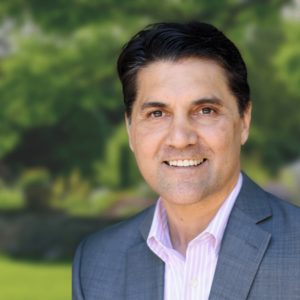
As a leadership coach and facilitator, and co-founder of bluSPARC, I’ve had the privilege of working closely with leaders navigating big transitions—new roles, acquisitions, scale-ups, pivots, and everything in between.
And I’ve seen this one thing, again and again: The most powerful learning doesn’t happen alone. It happens in circles. In community. With peers. In context.
Yes, individual coaching is still incredibly valuable (and something we do a lot of). But over the years, I’ve witnessed a different kind of transformation unfold when leaders learn together, with intention, structure, and real business stakes in play.
We call this peer and cohort learning—and I believe it’s one of the most underutilized tools in leadership development today.

From Expert to Facilitator: The Coach’s Role Evolves
One of the biggest shifts I’ve seen in our work is how the role of the coach has evolved. In traditional executive coaching, the coach is often seen as the expert—the external voice who helps a leader reflect, gain clarity, and build new capability.
That still matters. But in cohort learning environments, the coach becomes something else: A facilitator of insight. A mirror for the group’s wisdom. Someone who holds the room, not to teach, to ask better questions and surface deeper truths.
At bluSPARC, we often say: “The learning is already in the room.” Our job is to help unlock it.
Cohort journeys don’t replace individual coaching—they extend it. And when peer coaching is embedded inside those journeys, something special happens: learning becomes shared, scalable, and grounded in culture.
Why Peer & Cohort Learning Is So Powerful
Here’s what makes this approach so compelling:
- It’s live: The work is anchored in real challenges, not theoretical scenarios.
- It’s social: Leaders coach each other, building trust across functions and levels.
- It’s contextual: Everything happens within the walls (and the culture) of the organization.
- It’s reflective: People learn to ask better questions of themselves and others.
- It’s sticky: Because it’s not a workshop – it’s a journey.
And unlike one-to-one coaching, which often happens in private, cohort learning creates a visible ripple across the organization. It builds shared language, cross-functional empathy, and a deeper awareness of the system people are leading in.
What It Looks Like in Action
Let me share two quick stories from our work at bluSPARC.
Post-Acquisition Integration in Retail
A global retail company had just acquired two regional players. On the surface, it was about merging operations. But under the hood, it was about aligning personalities, priorities, and leadership cultures.
We launched a series of cross-company cohort learning groups—bringing together senior and mid-level leaders to reflect, share stories, and build trust.
At first, it was tentative. Different systems, different histories, different ways of working. But over time, through peer coaching and structured dialogue, something powerful emerged: A new leadership identity. Shared ownership. A shift from “us and them” to “we.”
The impact? Faster alignment, better decision-making, and a new layer of leadership trust that supported the integration long after the formal program ended.
Strategic Alignment in a High-Growth E-Commerce Company
An e-commerce tire business was growing fast—but with that came fragmentation. Silos were forming, teams weren’t aligned, and strategy was being interpreted in wildly different ways.
We designed a cohort learning journey for leaders across functions—tech, marketing, ops, finance. The goal: build an enterprise mindset, not just functional excellence.
The result? Leaders started seeing beyond their own metrics. They collaborated differently. They made trade-offs with the business in mind, not just their team.
Through peer coaching and group reflection, they developed the perspective needed to drive not just growth, but cohesive innovation.
What Makes These Journeys Work (and What Gets in the Way)
From experience, here’s what we’ve learned:
What enables success
- Psychological safety (this is non-negotiable)
- Structured facilitation, not freeform dialogue
- Executive visibility and buy-in
- Clear connection to business challenges
What derails it
- Treating it like a “program” rather than a journey
- Forcing participation without purpose
- Lack of relevance to real-time challenges
The biggest shift? When leaders realize they don’t need more content-they need better questions, better spaces, and better thinking partnerships.
The Future of Learning is Collective
Leadership isn’t about having all the answers—it’s about making space for better questions.
And the leaders who thrive today aren’t lone heroes. They’re the ones who learn in motion, in community, with humility and curiosity.
At bluSPARC, we build cohort learning experiences that turn leadership into a shared journey. One where people reflect together, stretch each other, and solve real challenges with clarity and context.
Because when leaders learn to coach themselves—and each other—you don’t just build capability. You build culture.
Final Thought: It Starts With Us
If you’re an HR leader, senior executive, or transformation driver wondering how to unlock more alignment, more perspective, and more shared leadership in your organization…
Start here.
Not with another playbook. Not with another leadership model.
But with a simple question:
What would it look like if our people learned to grow each other?
Let’s build the spaces where that kind of learning becomes not the exception—but the norm.